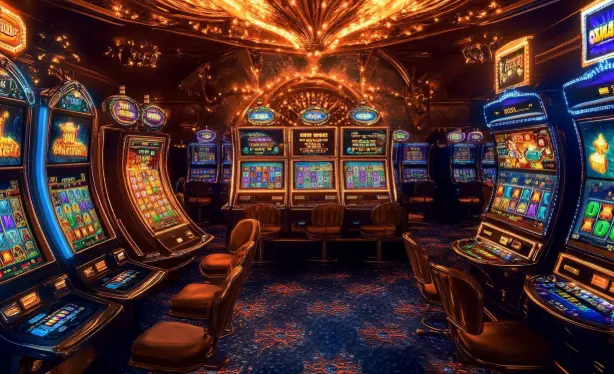
The Evolution of Casino Resort Design as a Cultural Phenomenon
Modern casino architecture has transcended its functional origins to become a legitimate field of architectural study, attracting enthusiasts who pursue Casino Architecture Tours across global destinations. From the Belle Époque grandeur of Monte Carlo's Casino de Monte-Carlo to the postmodern spectacle of Las Vegas, these structures represent a convergence of engineering ambition, artistic vision, and commercial strategy. The architectural language of gambling establishments has evolved through distinct periods—each reflecting broader cultural attitudes toward leisure, luxury, and risk. 🎰
Understanding the Typology of Gaming Establishments
Architectural historians classify casino structures into several typologies: the European salon model, characterized by intimate proportions and neoclassical detailing; the American mega-resort, defined by sprawling floor plates and themed environments; and the integrated resort, which blends gaming with hospitality, retail, and entertainment infrastructure. Each typology demands distinct spatial strategies—from sightline optimization across gaming floors to the psychological manipulation of ceiling heights, lighting temperature, and circulation pathways that keep patrons engaged without conscious awareness of time passage.
Key Destinations for Serious Architectural Study
Monte Carlo remains the definitive pilgrimage for purists. Charles Garnier's 1878 masterpiece employs Beaux-Arts symmetry and opulent atrium design that established the template for casino-as-palace.  In Macau, the Grand Lisboa's lotus-inspired silhouette by Dennis Lau and Ng Chun Man demonstrates how cultural symbolism can be fused with high-density urban planning. Singapore's Marina Bay Sands, designed by Moshe Safdie, introduced the cantilevered SkyPark—a structural feat that redefined the relationship between casino architecture and public space. Las Vegas, meanwhile, offers a living laboratory: the Bellagio's Italianate facade, the Venetian's literal reconstruction of Venice, and the Cosmopolitan's vertical chandelier atrium each represent different philosophical approaches to themed environments.
Materials, Lighting, and Psychological Design
The material palette of casino architecture deserves particular attention. Polished marble, brass inlay, hand-blown glass, and custom carpeting serve dual purposes—aesthetic enrichment and sensory stimulation. Lighting design follows a precise science: warm ambient temperatures between 2700K and 3000K encourage relaxation and prolonged stays, while strategic accent lighting draws attention to gaming positions and architectural features. Acoustic engineering eliminates external noise while maintaining a low-level hum that creates a sense of activity without overwhelming conversation.  These elements collectively form what designers call the "casino atmosphere"—an intangible quality that no photograph fully captures.
Planning Your Architectural Tour Itinerary
A well-structured casino architecture tour should prioritize chronological development. Begin with Monte Carlo and Baden-Baden for foundational understanding of the salon tradition. Progress to Las Vegas for the American evolution, then to Macau and Singapore for contemporary Asian interpretations. Consider engaging licensed architectural historians or joining specialized cultural tourism groups that provide access to restricted areas—high-limit salons, private gaming rooms, and back-of-house circulation zones rarely seen by casual visitors. Documentation through photography is generally permitted in public areas, though gaming floors impose restrictions that vary by jurisdiction and should be respected absolutely.
Preservation Challenges and Contemporary Relevance
Many significant casino structures face preservation dilemmas. The rapid renovation cycles of gaming properties mean that architecturally important interiors are frequently demolished or covered by newer design interventions. Organizations dedicated to architectural heritage have begun documenting these spaces before alteration. Meanwhile, contemporary architects continue pushing boundaries—Bjarke Ingels Group's proposals for integrated resorts incorporate sustainable systems, natural ventilation, and biophilic elements that respond to increasing environmental consciousness within the hospitality sector. The casino as architectural typology remains vital, adaptive, and endlessly compelling for those who study the built environment with a critical eye. ♠️